
Showing posts with label history. Show all posts
Showing posts with label history. Show all posts
Saturday, November 29, 2014

Saturday, April 12, 2014
Documentary Night: Faster Than Sound

This is an older episode of Nova. It's not a "classic" episode. I don't think we can call anything after 1990 "classic" just yet, but it's old enough, being from the 97-98 season. Of course, you probably already knew that from the hilariously mid-1990's CGI applied to every logo at the beginning of the show.
Oh, 90's. You loved your CGI text.
Thursday, February 13, 2014
Documentary Night: A Short History of In-Home Heating
I get the feeling that this is somehow funded by a petroleum company trying to convince us that they "care." Regardless, Neil Oliver is awesome and even this five-minute short is worth a watch.
Tuesday, November 05, 2013
Documentary Night: The Last Explorers- Thomas Blake Glover
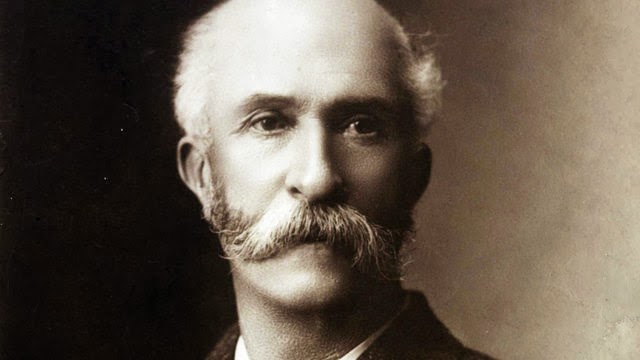 |
| Thomas Blake Oliver, rockin' the 'stache. |
Tuesday, March 19, 2013
Monday, March 11, 2013
Really Existing Free Markets
This is less than an hour out of your life that will hopefully change your views, if you haven't already heard this. It was a seminal speech given by Noam Chomsky and one of the most piercing bits of economic philosophy done in the past fifty years. I stress philosophy, because this is not economics. He mentions many economic studies to back up his philosophical thesis, but it is definitely logical and qualitative in nature.
Thursday, March 07, 2013
The Greatest Intellectual Dishonesty Of Religious Believers

I was just watching a documentary about Catholic history, and I was thinking about how so much of early Catholic belief was pulled from someone's ass. Indeed, after Augustine, and even a bit before him, difficulties in reaching conclusions from scripture alone resulted in the generally-accepted practice of determining doctrine from the works of interpreters. As such, we are in our current bizarre situation, where the vast majority of Christian dogma cannot be found in any gospels or scrolls.
For my part, the point of greatest WTF, and indeed the point of greatest intellectual dishonesty, lies with the learned members of the church who rabidly research church history, and thus admit the truth of the history, yet seem to ignore the inconsistency inherent to this. To wit, if one accepts the history of the church, they must accept that beliefs and behaviors have changed and evolved, existed before the church, and will likely exist after the church has faded. Indeed, they must accept that the church will likely fade.
How can one's beliefs be timeless and be true, if they were different in the past? To me, it is impossible. If an eternal truth is one way today, then it must have been the same in the past, and will be the same in the future. Admitting the evolution of the truth negates its status as true, at least as regards this situation.
For the average church-goer, my criticism doesn't much apply. Many of them are unaware of the history of their own church, and are even less aware of obscure theological conflicts like the "mystery" of the Trinity. Since their beliefs are nebulous and undefined, there is no conflict, and thus no intellectual shenanigans. But the hypocritical dishonesty necessary to accept the evolution of one's own dogma while still asserting the truth of that dogma is almost beyond my ability to understand.
Sunday, November 11, 2012
There Is No Discussion

Andrew O'Hehir is one of my more well liked writers. He reviews movies, writes on a variety of subjects, and has a well-measured attitude on most things. As such, it's not surprising to find him as the most recent addition to the pantheon of writers and thinkers who ask "can't we all just get along?"
If we think we can understand this division better by using cute demographic shorthand or by trying to claim that it’s fundamentally about religion or abortion or sexual morality or the role of government or whatever other hobby horse we choose to ride, we’re kidding ourselves.And so is O'Hehir's point. While he blunts the false equivalency attack at a point early in the article, he misses another point: the uselessness of the discussion. I don't mean to say that understanding the conservative movement is useless, I mean to say that a discussion about dealing with them as humans is useless.
Defining it as libertarian vs. communitarian, for instance, or as a religious view of society set against a more secular one always simplifies or overlooks some aspect of the problem. It involves values or mores that people hold on a primordial or unconscious level, which are not easily expressed in language and not readily subjected to rational inquiry. Translated into the political realm, these fundamental cultural mores become entrenched ideological positions, modes of expressing the unshakable conviction that my side is right and yours is wrong.
We just had an election that was a de facto contest between America’s competing cultural factions, and one side won a narrow but decisive victory to the intense amazement and anger of the other. More name-calling isn’t going to help. If there were ever a moment to talk about this stuff dispassionately, this would be it.
If we can’t find a way to address the American cultural divide, beyond insults and quadrennial beauty contests, it is sure to destroy us.
Even though both sides have abdicated logic and reason, at least to a degree, it is the conservative side that has abdicated it, and any hope for cogent language, to the extreme. They are relying entirely on nebulous, emotional concepts, and if we attempt to address these issues rationally, contradictions and problems are sure to arise. The instant that happens, and stress is thus caused, we have lost the people with whom we are trying to argue.
It is unfortunate, because I appreciate his feelings regarding the referenced video very well. I do feel bad for those who have been duped by the cynical patriotism of the modern Republican party. But at the same time, while I do not judge them, I will cast them aside without worry. They must be defeated in whatever way possible, because they represent the claws of the past, terrified by a brave new world, desperately trying to impede the future.
Moreover, I do not look at this battle in apocalyptic terms like O'Hehir does. I do not think that it is sure to destroy us. If the Civil War didn't, neither will this. Change comes, bit by bit, with every funeral. No matter how angry or contentious our current issues may become, and even if we accept that there is no way to resolve these issues, we will continue our march into the future as each generation rejects elements of the value system of those that came before.
We do not need to reason with the bigots, since they will die soon enough. And with few great works, with few marks in the sands of time, their sound and fury will be remembered as little more than a tale, told by an idiot, signifying nothing.
Wednesday, July 25, 2012
Psychology Is Science

I assumed that this was something of the paranoid ramblings of professors who cut their teeth in the psych world of the 1970's, back when psychology was finally shaking off the last bits of spiritual, metaphysical junk left behind by Freud and Jung. It was very much a problem. In my collection, I have some psychology books from the 1920's, and the work of Freud and Jung was taken as true! People actually believed this stuff!
It was comical to me, comical to every single one of my classmates, and comical to my professors. I appreciated that this baggage was once there, but could see plainly that it no longer was. Psychology was a science trying desperate to prove something everyone already believed.
In retrospect, perhaps I was naive. I only ever went to psychological conferences. I only ever worked with other psychologists and psychiatrists. And whenever I was involved with those from other fields, it was neurologists, with whom there was so much cross-pollination with psychology that it almost gelled into a single field.
As I have since learned, there is still a great deal of prejudice against psychology, being as it is a "soft" science. The major point against it is that "soft" sciences do not produce predictions.
I find this criticism absurd. Of course psychology produces predictions. Those predictions may be probabilistic, but they are predictions nonetheless. The limitation that we have is that our ability to measure humans is limited by our interaction with the machine that is a human: behavior. It is an imperfect measurement, but no less imperfect than measurements in the work of very early scientists. And as research continues, our ability to read behavior will get increasingly better — our ability to understand the workings of the machine will advance.
Stop bullying the 'soft' sciences (Via L.A. Times)
Saturday, July 14, 2012
Clovis Is Dead

I meant to post about this a few days ago, but here it is. Clovis is dead! And by Clovis, I mean the "Clovis First" theory. In a nutshell, the theory states that the prehistoric American culture seenin an find in Clovis, New Mexico represents the first humans to come to the New World over the Bering Straight land bridge before it was closed up with ice during the last Ice Age.
I was studying this seven years ago, and even then, the general opinion in the academic world was that Clovis first was almost undoubtedly wrong. Only later did I find out that there were many who were not only arguing as Devil's Advocate, but actually believed that "Clovis First" was true.
This blew my mind. One of the tenets of archaeology is that whatever is found, chances are, it was around long before the date of the artifacts. That makes perfect sense. Think about it. The chances that a find is the very first example of some given thing is essentially zero. It must always be assumed that what is found is older than the find. I'm disappointed because this study only shows Clovis to be pre-dated by one thousand years. Only a thousand? That's a "duh" statement! I wanted five thousand. Ten thousand.
Wednesday, June 06, 2012
In Memory of Ray Bradbury
Ray Bradbury died yesterday. As far as I know, he was the last surviving member of the "old sci-fi" club: the writers who came from the same wellspring of wonder that birthed Wells and Verne. I don't know what resulted in the eventual... corruption? No. Corruption isn't quite the correct word. Cynicizing. Is that word? I just made it one.
I don't know what resulted in the eventual cynicizing of Science Fiction and Fantasy. Perhaps it was the Vietnam War and rising social inequality. Perhaps it was increasing cynicism in politics and the rise of the conservative parties. Perhaps it was the discovery of the real world by the idealistic hippies. Whatever it was, science fiction and fantasy have, by and large, rejected wonder and hope in favor of cynical depression.
Instead of wonder, we get gritty pessimism and are told that it is adult. That old Sci-Fi was kid's stuff. You know what? Screw that. How many hard science writers do we have operating today? How many writers write with cold, exacting knowledge of the science that is in their work? Damn few.
That's not to say that there aren't any out there. They continue to bubble underneath the churn. One can only hope that we will look back upon this has an era in sci-fi and fantasy, and that we will eventually move on to another era.
Where is the next generation of wide-eyed dreamers? That's what I want. I don't want Blade Runner redux. I don't want another William Gibson.
One must wonder why Sci-Fi is so pessimistic. Science Fiction was at its most optimistic during the freaking Cold War. There was very good reason to be angry and cynical, and yet some of the most hopeful works ever written were done during that time. Times are economically a bit pissy, right now, but aside from that, times are great!
We are more aware of the ethical and ecological problems of progress than ever before. Equality is rising. Women are nearing pay parity with men in the Western World. Gay marriage is just around the corner. Disregarding the American extremist movement, religion is dying. This is a great time to be alive. And yet, Sci-Fi thinks that we are one step away from global apocalypse.
Perhaps that's it. Perhaps when things are actually rather good, a book that just tells you how good things are isn't very interesting. It's not novel. Truly, the very word "novel" stems from the word for "new." Sci-Fi, perhaps more so than any other genre, must be new to be captivating.
But I don't care about that. I care about what I want. And I want the old stuff. I want wonder, and magic, and hope. Because I can't buy distopia. It's just too damned improbable. We could have blown ourselves up... and yet we didn't. That is as near a miracle as has ever happened in history. How can I not be optimistic after that?
Mike Labossiere said it well over at io9.
I will miss Bradbury. He was a bit silly in some ways, but he was optimistic and idealistic. He had wonder. He had hope. He had dreams of a better world. Where is that, today?
I don't know what resulted in the eventual cynicizing of Science Fiction and Fantasy. Perhaps it was the Vietnam War and rising social inequality. Perhaps it was increasing cynicism in politics and the rise of the conservative parties. Perhaps it was the discovery of the real world by the idealistic hippies. Whatever it was, science fiction and fantasy have, by and large, rejected wonder and hope in favor of cynical depression.
"The universe is a little emptier right now," Texas A&M Commerce English Professor Robin Ann Reid told Yahoo News. She wrote a book about Bradbury's works and sits on the board of the Center for Ray Bradbury Studies. "There's less of that sense of joy and exulation that he was writing in his works all the way to the end."
Instead of wonder, we get gritty pessimism and are told that it is adult. That old Sci-Fi was kid's stuff. You know what? Screw that. How many hard science writers do we have operating today? How many writers write with cold, exacting knowledge of the science that is in their work? Damn few.
That's not to say that there aren't any out there. They continue to bubble underneath the churn. One can only hope that we will look back upon this has an era in sci-fi and fantasy, and that we will eventually move on to another era.
In a recent issue of the New Yorker, Bradbury wrote about discovering science fiction stories as a child growing up in Waukegan, Illinois, and his love for his grandfather. "I would go out to that lawn on summer nights and reach up to the red light of Mars and say, "Take me home!" I yearned to fly away and land there in the strange dusts that blew over dead-sea bottoms toward the ancient cities," he wrote.
Where is the next generation of wide-eyed dreamers? That's what I want. I don't want Blade Runner redux. I don't want another William Gibson.
One must wonder why Sci-Fi is so pessimistic. Science Fiction was at its most optimistic during the freaking Cold War. There was very good reason to be angry and cynical, and yet some of the most hopeful works ever written were done during that time. Times are economically a bit pissy, right now, but aside from that, times are great!
We are more aware of the ethical and ecological problems of progress than ever before. Equality is rising. Women are nearing pay parity with men in the Western World. Gay marriage is just around the corner. Disregarding the American extremist movement, religion is dying. This is a great time to be alive. And yet, Sci-Fi thinks that we are one step away from global apocalypse.
Perhaps that's it. Perhaps when things are actually rather good, a book that just tells you how good things are isn't very interesting. It's not novel. Truly, the very word "novel" stems from the word for "new." Sci-Fi, perhaps more so than any other genre, must be new to be captivating.
But I don't care about that. I care about what I want. And I want the old stuff. I want wonder, and magic, and hope. Because I can't buy distopia. It's just too damned improbable. We could have blown ourselves up... and yet we didn't. That is as near a miracle as has ever happened in history. How can I not be optimistic after that?
Mike Labossiere said it well over at io9.
As a science fiction fan (and a very, very minor writer), I am somewhat inclined to agree with this. In my own case, I find myself loading my Kindle with science fiction from the early to mid twentieth century and ignoring the new novels. In part, this is pure thrift — I can, for example, get H. Beam Piper's works for free. However, part of it is because the new stuff seems to lack something possessed by the good old stuff. While I have thought about this for some time, I am beginning to suspect that my experience seems to match Stephenson's: the new stuff generally seems to lack a certain thread of optimism that ran through the good old stuff — even the old dystopian stuff.
I will miss Bradbury. He was a bit silly in some ways, but he was optimistic and idealistic. He had wonder. He had hope. He had dreams of a better world. Where is that, today?
Tuesday, May 22, 2012
Documentary Night: A History of Celtic Britain
To go along with my previous post, The History of Ancient Britain, comes this post! Done by the same guy as the first post! If you liked the previous documentary, you'll love this one. If you didn't like it, don't bother. It's precisely the same style. The guy's presence on camera grows on you, I have to admit. He should get his hair cut, though. Damn hippy.
Tuesday, May 15, 2012
Documentary Night: A History of Ancient Britain
Quite a few pieces to this one, so it will probably take you more than one night. It's a bit lean on information, and the presenter isn't exactly a firecracker, but it effectively gets you interested in British archaeology.
Saturday, May 05, 2012
If You Do Not Vaccinate Your Children, You Are Stupid
 ABC News, coming late to the party, I'm sure, has posted a video highlighting a recent surge in whooping cough cases in Washington state. They have had ten times as many cases this year so far as they had in all of 2012. Unless you've been living under a rock, you can probably guess as to why.
Yes, it's because idiot parents are deciding that vaccinations are the cause of all children's ills and choosing against them. Thus, we have massive spikes in all of the illnesses that the various Brontë sisters had at some point in their lives. Yes, it's like the 1800's all over again.
I'm going to simply add my voice to cacophony of well-supported screaming going on in the medical world, if for no other reason than one other voice, no matter how insignificant, is better than silence. If you do not vaccinate your children, you are stupid. Indeed, you are so stupid, you should give serious consideration as to whether you want your genes being transferred to the next generation. Because while the gene for abject stupidity is recessive, your mate hypothetically agrees with you, so he or she may be a carrier as well.
I can only assume that this is a side-effect of living in our comparatively super-safe Western society. We seek out danger, because something in our hind-brain is telling us that there is danger out there, somewhere. And after being separated from the real danger for over three generations, the things that are actually protecting us may seem threatening.
First, this perspective is disgustingly Western-centric. There are millions of people all around the globe who live in daily fear of the diseases that we have "conquered." Polio, pertussis, measels, mumps, and every imagineable permutation of influenza kill with abandon in less-developed countries. To say that these diseases aren't real threats is idiotic, ignorant, and insulting.
I've posted all five parts of PBS' The American Experience: The Polio Crusade. Watch the videos of children suffering from polio, and then try saying that it's some conspiracy of the medical community to... to... I don't know. Make money? Rule babies? I don't care. Shut up, and vaccinate your children.
Tuesday, October 11, 2011
The Technology World Without Steve Jobs
Many people are asking what the world will be like without Steve Jobs. Many people are saying that everything is fundamentally different. This is, of course, stupid.
Obviously, it would be equally stupid to disparage Jobs. He was a consummate artist and Apple is as much a corporeal manifestation of his internal world as it is a company. But overly exalting Jobs ignores reality. No one exists in a vacuum. Everyone is a reciprocal entity.
In much the same way as the world of philosophy, a thinker's viewpoint as much represents sentiment of the time as it does his or her own, unique thoughts. They exist together. One does not guide the other. The thinker and the world, the creator and the created, stumble into the future together.
The whole of the market is like a giant game of Ouija, where thousands of hands are guiding things. Not seeing the forest for the trees, looking at things in a quantum way, leads to an inaccurate perception of history as a linear narrative. This person caused this, this person caused that.
For example, do you think that if Newton hadn't come around, the truths of gravity would have never been discovered? If Watt hadn't invented his steam engine, do you think that large-scale steam power would have never been created? Of course they would have. Gravity would have been formulated, steam power would have created the industrial revolution. Aside from large-scale structural differences, the world would look fundamentally very similar.
Great inventions have a weird habit of being invented at the same time, independently, by completely isolated groups or individuals. It's amazing how few people realize this. If the telephone was invented by multiple people, all within a month of each other, why do we hold up Alexander Graham Bell as some shimmering example of human ingenuity?
I admit that many artistic achievements would never have happened if not for singular people. Same goes for stories, or movies, or songs. But in creations bound by a physical reality or the needs of a physical reality, certain attributes of any creations are necessarily guided by the nature of the time. The computer and technology world would not look exactly like it does if Apple had never been around, but it would certainly be recognizable.
This perspective is never popular since it reduces our heroes. It forces us to recognize that no matter how great a person might be or have been, the world would have chugged along perfectly well without her. It also reduces us and our fantasies. We all have fantasies of being someone of great import, but if people are only ever important vis-a-vis other people, and not in regards to some grand, cosmic standard, how can we maintain that fantasy?
Truly, western culture specifically seems obsessed with the heroic, singular person. Look at Ayn Rand. Her philosophy and explicit formulation of a person as a heroic entity is the absolute manifestation of this ideal. Again, we see this in the modern right-wing movement. One hundred years ago, at least those who thought they were the elite were actually the elite: robber barons and whatnot. Today, it's Mississippi.
We can see it again in the wholly Western focus on lost civilizations. Why are we so obsessed with Atlantis, Lemuria, Mu, and their ilk? Because all of them were "advanced," even beyond what we have today. It is yet another thread from the underlying belief that great things can happen in a vacuum. All it takes is that "spark."
Did Steve Jobs and Apple change the world? Yes. Would the world have changed without them, simply in a different way? Also yes. His mark is indelibly placed on this planet, which I consider the goal of life. As the world was shifting, he molded part of it to suit his vision. He etched "Steve was here" into the sands of time. But to say that the world would still be in the technological dark ages without him is absurd.
Obviously, it would be equally stupid to disparage Jobs. He was a consummate artist and Apple is as much a corporeal manifestation of his internal world as it is a company. But overly exalting Jobs ignores reality. No one exists in a vacuum. Everyone is a reciprocal entity.
In much the same way as the world of philosophy, a thinker's viewpoint as much represents sentiment of the time as it does his or her own, unique thoughts. They exist together. One does not guide the other. The thinker and the world, the creator and the created, stumble into the future together.
The whole of the market is like a giant game of Ouija, where thousands of hands are guiding things. Not seeing the forest for the trees, looking at things in a quantum way, leads to an inaccurate perception of history as a linear narrative. This person caused this, this person caused that.
For example, do you think that if Newton hadn't come around, the truths of gravity would have never been discovered? If Watt hadn't invented his steam engine, do you think that large-scale steam power would have never been created? Of course they would have. Gravity would have been formulated, steam power would have created the industrial revolution. Aside from large-scale structural differences, the world would look fundamentally very similar.
Great inventions have a weird habit of being invented at the same time, independently, by completely isolated groups or individuals. It's amazing how few people realize this. If the telephone was invented by multiple people, all within a month of each other, why do we hold up Alexander Graham Bell as some shimmering example of human ingenuity?
I admit that many artistic achievements would never have happened if not for singular people. Same goes for stories, or movies, or songs. But in creations bound by a physical reality or the needs of a physical reality, certain attributes of any creations are necessarily guided by the nature of the time. The computer and technology world would not look exactly like it does if Apple had never been around, but it would certainly be recognizable.
This perspective is never popular since it reduces our heroes. It forces us to recognize that no matter how great a person might be or have been, the world would have chugged along perfectly well without her. It also reduces us and our fantasies. We all have fantasies of being someone of great import, but if people are only ever important vis-a-vis other people, and not in regards to some grand, cosmic standard, how can we maintain that fantasy?
Truly, western culture specifically seems obsessed with the heroic, singular person. Look at Ayn Rand. Her philosophy and explicit formulation of a person as a heroic entity is the absolute manifestation of this ideal. Again, we see this in the modern right-wing movement. One hundred years ago, at least those who thought they were the elite were actually the elite: robber barons and whatnot. Today, it's Mississippi.
We can see it again in the wholly Western focus on lost civilizations. Why are we so obsessed with Atlantis, Lemuria, Mu, and their ilk? Because all of them were "advanced," even beyond what we have today. It is yet another thread from the underlying belief that great things can happen in a vacuum. All it takes is that "spark."
Did Steve Jobs and Apple change the world? Yes. Would the world have changed without them, simply in a different way? Also yes. His mark is indelibly placed on this planet, which I consider the goal of life. As the world was shifting, he molded part of it to suit his vision. He etched "Steve was here" into the sands of time. But to say that the world would still be in the technological dark ages without him is absurd.
Thursday, July 14, 2011
Tuesday, June 28, 2011
Pale Blue Dot
The name of this blog is taken from a book by Carl Sagan. His wisdom cannot be understated.
Friday, May 27, 2011
A Great BBC Protestant Documentary
The flow of great documentaries out of the BBC is seemingly endless. I just finished watching Niall Ferguson's Civilization: Is The West History, which was problematic, and I already find this one.
I like this one more, but it still falls for what I consider the fallacy of causation. I take a sort of James Burkeian perspective, which I consider the correct perspective, that there is no linear causation in history. There are webs of causation. So to say that the Protestant Reformation was the root of all of these things is an inaccuracy.
Regardless of that almost exegetical issue, I find this documentary, and its presenter, really compelling. They present the effects of the Reformation entertainingly, while not sacrificing information density.
I like this one more, but it still falls for what I consider the fallacy of causation. I take a sort of James Burkeian perspective, which I consider the correct perspective, that there is no linear causation in history. There are webs of causation. So to say that the Protestant Reformation was the root of all of these things is an inaccuracy.
Regardless of that almost exegetical issue, I find this documentary, and its presenter, really compelling. They present the effects of the Reformation entertainingly, while not sacrificing information density.
Sunday, May 15, 2011
Civilization: Is The West History
Niall Furgeson, who has said some really stupid stuff in the past, has produced a 6-part documentary series that I think is rather good. As far as British productions go, it's not up there with Connections or anything, but still very much worth a watch.
He makes a lot of sweeping declarations in this series with which I completely disagree. I also don't like his usage of the terms "killer apps" and "west." The former sounds too much like a desperate attempt to be hip, and the second term is one that I find incorrect at its core. How is he defining the west? Are we just a group of people? He seems to indicate that the west was defined by ideas that allowed it to dominate. But now, large parts of the world have appropriated those ideas. So isn't the west still winning?
If we are simply talking about groups of people, then the fluidity of population groups that's allowed in the modern world renders labels difficult. And if ideas are equal, saying that China will "defeat" the United States is silly. Whichever country has the largest population will necessarily have the largest economy.
We can extend the argument even to "western" civilization, today. For example, is the United States defeating Japan, Sweden, or Germany? We have the bigger economy. We're producing the most shit. But it's absurd to say that we are beating them.
My argument is in essence semantic. The West could never be consigned to history if the West's ways are what dominate the entire planet. That is unless we're defining the West as nothing more than a group of people, and today, defining culture, country, and society as simply a group of people is ignorant.
He starts the series with some sweeping statements which I think are unsupportable, but then backs off a bit and it becomes much more an entertaining journey through history. He then returns to sweeping statements in the last episode, where he argues that the Protestant work ethic, work hard and don't spend it, is what put England, the US, and Germany on top of the world.
I find this thesis absurd. I think the "killer app" for America, Britain, and Germany was the abandonment of royalty. This fosters a belief that you too can succeed and reach that brass ring. The more hope people have for being rich, the harder they're going to work to reach that goal. It's this that helps to explain why the biggest difference between the US and Europe, the sheer number of our successful start-ups, are done by those who are not religious.
It also explains why so many movers and shakers are Jewish. Or why Japan, once stripped of the focus on the group and the emperor, became an industrial powerhouse in twenty-five years, and why China is doing the same thing. It wasn't protestantism, it was a belief that you can succeed. People in China worked their bloody asses off long before the west came 'round, only now, that work helps them and not others.
I also laughed at is claim that China is importing Christianity. About 12% of believers are Christian, which works out to about 3% of the population. And since we have no data, we don't know when these people started believing. Religion was once banned, and Christianity has a habit of being strongest when it's under attack. Chinese religion is wildly difficult to measure, but the one thing we can be sure of is that Christianity is dwarfed by Buddhism, Taoism, and even explicit atheism.
I do find his insight about multiple churches competing for followers compelling, though. The only addition that I have is that protestantism had little to do with it, it was the huge expanses of land that frequently separate settled areas. This allowed multiple types of churches to spring up. In Europe, the population was much denser. Again, this helps to explain why religion is strongest in the more rural areas of the US; areas with farms, and the out-there areas of the American South West.
Feruson closes by voicing his fear that the west is losing its edge. He says some frighteningly Randian things about the importance of property rights, which highlights a big issue I had with his overall concept. He thinks that the United States became dominants because people could become land-owners and thus voters. He assumes that land was valuable in the US like it was in Europe, which I think is wrong. Land the US was worthless. The issue was that in Europe, there was no land. It was all taken up. Land was valuable, money wasn't, because you knew that your land would always produce more.
In the US, this was reversed. Yes, people could become land-owners, but it was what happened after land acquisition that was actually important: the vote. The land itself simply came along for the ride because people thought that land was valuable. That was of course, until they came here and found out that even being a land-owner sucked. Being the money holder is what became important in the US, which again helps to explain the rise of Jews in the US. They had a lot of money.
He takes a swipe at governments who "violate our property rights" to tax us and "waste our money." Again, sounding dangerously Randian, here. What rights? How are they violated? Is the money actually being wasted? How is it being wasted. This was a massive statement to make that he just casually tosses out there.
Property isn't important. It's only seen as important because there's so damned little of it in Europe. And by that, I mean the assumption that people need to be land owners to succeed. Are property laws important? Yes. Of course they are. But they're just as important as any law about shit that is "mine" or "yours."
When Ferguson remains conservative in his statements, the documentary is at is best and most credible. When he gets sweeping, it falls on its face.
He makes a lot of sweeping declarations in this series with which I completely disagree. I also don't like his usage of the terms "killer apps" and "west." The former sounds too much like a desperate attempt to be hip, and the second term is one that I find incorrect at its core. How is he defining the west? Are we just a group of people? He seems to indicate that the west was defined by ideas that allowed it to dominate. But now, large parts of the world have appropriated those ideas. So isn't the west still winning?
If we are simply talking about groups of people, then the fluidity of population groups that's allowed in the modern world renders labels difficult. And if ideas are equal, saying that China will "defeat" the United States is silly. Whichever country has the largest population will necessarily have the largest economy.
We can extend the argument even to "western" civilization, today. For example, is the United States defeating Japan, Sweden, or Germany? We have the bigger economy. We're producing the most shit. But it's absurd to say that we are beating them.
My argument is in essence semantic. The West could never be consigned to history if the West's ways are what dominate the entire planet. That is unless we're defining the West as nothing more than a group of people, and today, defining culture, country, and society as simply a group of people is ignorant.
He starts the series with some sweeping statements which I think are unsupportable, but then backs off a bit and it becomes much more an entertaining journey through history. He then returns to sweeping statements in the last episode, where he argues that the Protestant work ethic, work hard and don't spend it, is what put England, the US, and Germany on top of the world.
I find this thesis absurd. I think the "killer app" for America, Britain, and Germany was the abandonment of royalty. This fosters a belief that you too can succeed and reach that brass ring. The more hope people have for being rich, the harder they're going to work to reach that goal. It's this that helps to explain why the biggest difference between the US and Europe, the sheer number of our successful start-ups, are done by those who are not religious.
It also explains why so many movers and shakers are Jewish. Or why Japan, once stripped of the focus on the group and the emperor, became an industrial powerhouse in twenty-five years, and why China is doing the same thing. It wasn't protestantism, it was a belief that you can succeed. People in China worked their bloody asses off long before the west came 'round, only now, that work helps them and not others.
I also laughed at is claim that China is importing Christianity. About 12% of believers are Christian, which works out to about 3% of the population. And since we have no data, we don't know when these people started believing. Religion was once banned, and Christianity has a habit of being strongest when it's under attack. Chinese religion is wildly difficult to measure, but the one thing we can be sure of is that Christianity is dwarfed by Buddhism, Taoism, and even explicit atheism.
I do find his insight about multiple churches competing for followers compelling, though. The only addition that I have is that protestantism had little to do with it, it was the huge expanses of land that frequently separate settled areas. This allowed multiple types of churches to spring up. In Europe, the population was much denser. Again, this helps to explain why religion is strongest in the more rural areas of the US; areas with farms, and the out-there areas of the American South West.
Feruson closes by voicing his fear that the west is losing its edge. He says some frighteningly Randian things about the importance of property rights, which highlights a big issue I had with his overall concept. He thinks that the United States became dominants because people could become land-owners and thus voters. He assumes that land was valuable in the US like it was in Europe, which I think is wrong. Land the US was worthless. The issue was that in Europe, there was no land. It was all taken up. Land was valuable, money wasn't, because you knew that your land would always produce more.
In the US, this was reversed. Yes, people could become land-owners, but it was what happened after land acquisition that was actually important: the vote. The land itself simply came along for the ride because people thought that land was valuable. That was of course, until they came here and found out that even being a land-owner sucked. Being the money holder is what became important in the US, which again helps to explain the rise of Jews in the US. They had a lot of money.
He takes a swipe at governments who "violate our property rights" to tax us and "waste our money." Again, sounding dangerously Randian, here. What rights? How are they violated? Is the money actually being wasted? How is it being wasted. This was a massive statement to make that he just casually tosses out there.
Property isn't important. It's only seen as important because there's so damned little of it in Europe. And by that, I mean the assumption that people need to be land owners to succeed. Are property laws important? Yes. Of course they are. But they're just as important as any law about shit that is "mine" or "yours."
When Ferguson remains conservative in his statements, the documentary is at is best and most credible. When he gets sweeping, it falls on its face.
Subscribe to:
Posts (Atom)